



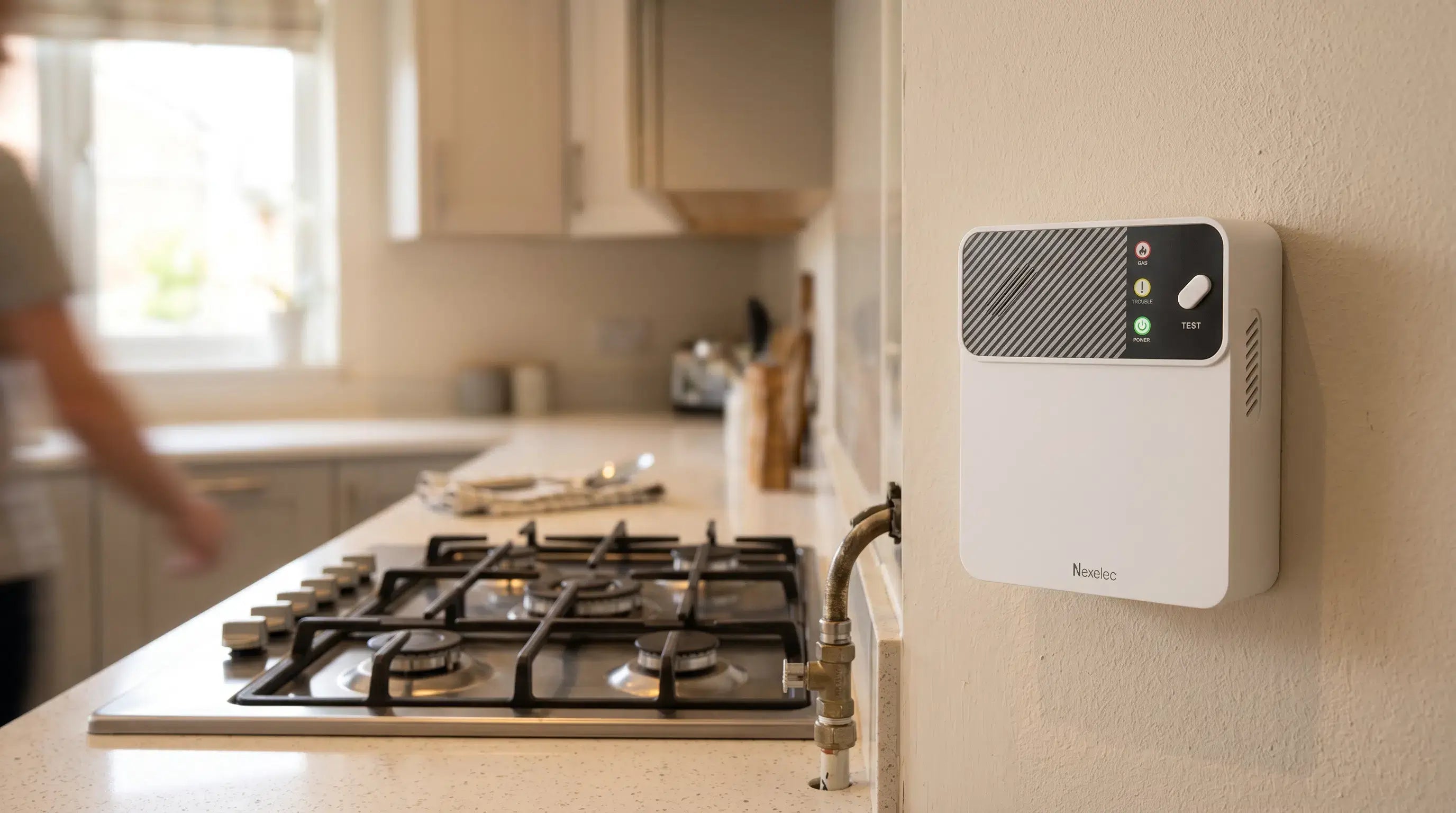
Preparing for NYC Local Law 157 with Nexelec VIGAS Natural Gas Alarms
New York City property owners have a clear new safety priority: preparing residential buildings for natural gas detection requirements under Local Law 157. The law is designed to give residents earlier warning of a potential natural-gas leak—helping reduce risks of fire, explosion, and delayed evacuation.
The current compliance date is January 1, 2027, subject to the City’s determination regarding the availability of compliant devices. That may feel distant, but large portfolios, resident-access coordination, installation planning, and recordkeeping all take time. For owners and managers, now is the practical time to assess buildings and select an alarm strategy.
What Local Law 157 requires
Local Law 157 expands residential safety requirements beyond smoke and carbon monoxide detection. It applies to covered New York City residential properties, including Class A and Class B multiple dwellings and certain private dwellings.
The specific application and installation approach depend on building type, gas service, appliance locations, and the applicable construction-code requirements. In general, owners should identify properties with natural gas piping, service, or gas-burning appliances and determine where approved natural gas detection is required.
A key distinction is that a carbon monoxide alarm is not a natural gas alarm. Carbon monoxide alarms detect CO created by incomplete combustion; natural gas alarms detect fuel-gas leaks, commonly methane, before combustion. Buildings may therefore need natural gas detection in addition to their existing smoke and CO alarm program.
Placement matters
Effective detection depends on more than purchasing the right device. In a dwelling unit with a fuel-gas-burning appliance, City guidance indicates that the natural gas alarm must be installed in the same room as the appliance, generally between three and ten feet away when measured horizontally.
Because natural gas is lighter than air and rises, placement differs from carbon monoxide alarm placement. Owners should follow the applicable NYC requirements as well as the manufacturer’s instructions for installation, maintenance, testing, and replacement.
Why consider Nexelec VIGAS?
VIGAS is Nexelec’s UL 1484 listed natural gas alarm for residential settings. It is designed to detect methane and provide both audible and visual alerts.
For property teams managing many units, its operational features are particularly relevant:
- 10-year sealed lithium battery
- Methane detection
- Audible and visual alarm notifications
- QR-based identification for installation and maintenance tracking
- Residential-focused design for multi-unit deployments
The sealed battery can help simplify long-term maintenance planning, while QR identification can give teams a more organized way to document installed devices, useful-life dates, inspections, and future replacements.
A practical compliance plan
A successful Local Law 157 program should combine device selection with a documented rollout process. Property owners and managers should:
- Inventory buildings with gas service, piping, or gas-burning appliances.
- Identify affected dwelling units, rooms, and common or mechanical spaces.
- Confirm the requirements that apply to each building type.
- Select appropriately listed natural gas alarms or systems.
- Plan installation around resident access and appliance locations.
- Record installation dates, device locations, and useful-life or replacement dates.
- Prepare required resident notices and safety information.
- Train building staff on alarm-response procedures and maintenance responsibilities.
The opportunity in early preparation
The January 2027 deadline is not simply a purchasing deadline. It is an opportunity to build a repeatable safety and compliance process across a portfolio. Beginning early gives owners time to validate placement, coordinate installation access, develop records, and avoid a last-minute scramble.
Nexelec VIGAS can be part of that approach by pairing residential methane detection with a ten-year sealed battery and QR-based device identification. Before deploying any product, owners should confirm that their chosen solution and installation plan meet the requirements applicable to their buildings.
For the latest official requirements, consult NYC HPD’s detector guidance and qualified building, code, or safety professionals.
About Nexelec
NEXELEC is a French manufacturer of connected building-safety and smart-building solutions, operating since 2009. Through NEXELEC USA, we provide natural gas, smoke, carbon monoxide, indoor air quality, water-leak and environmental monitoring solutions for residential and commercial buildings. Our solutions combine certified safety devices, LoRaWAN connectivity and the NAVIXIS platform for installation tracking, monitoring, and building-system integration.

Share:
Elevated Body Temperature Screening